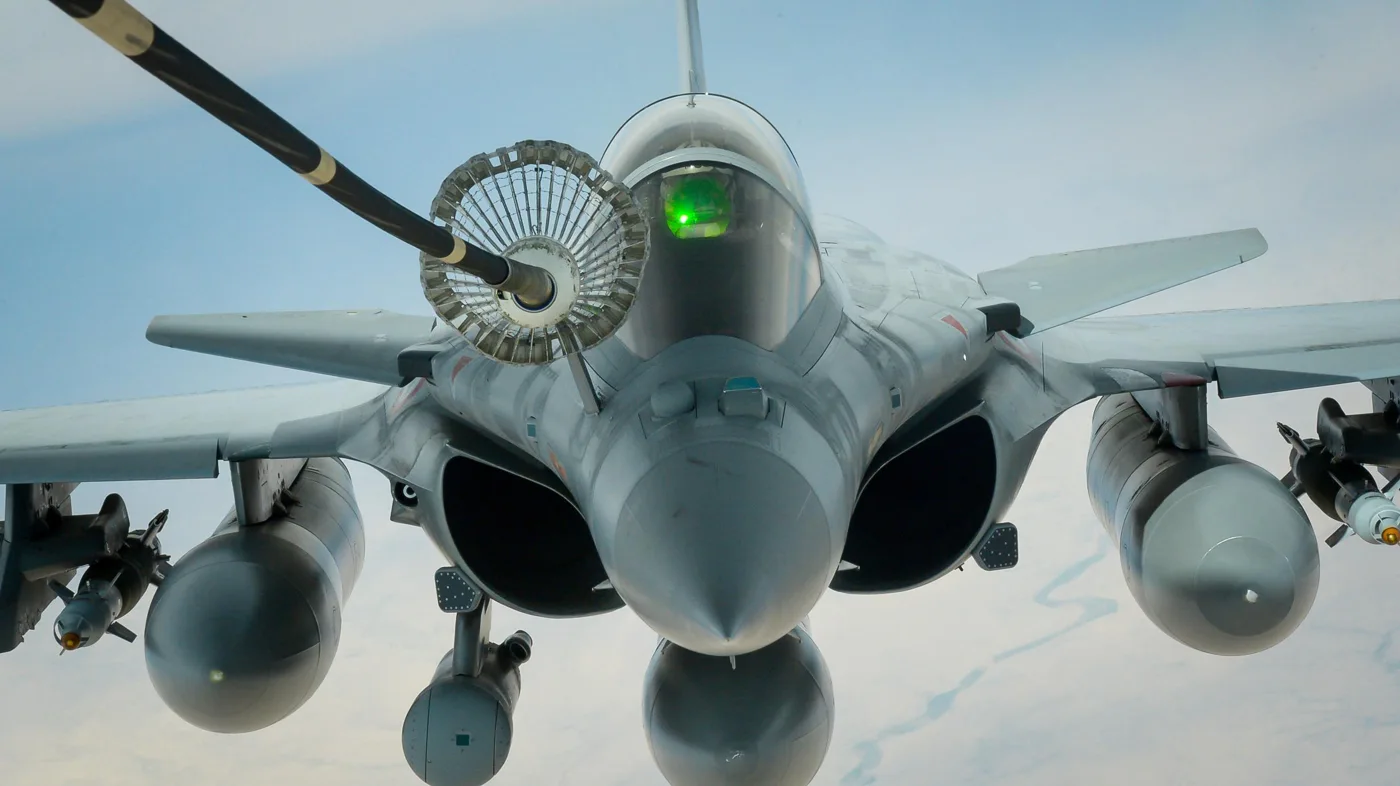
Dassault reports Rafale AI flight tests, with drone-teaming ambitions still a separate question
Two cockpit algorithms have been flight-tested, Dassault says. The announcement does not establish autonomous drone control or an operational deployment.
DWN · 2 min read Published 23 September 2026 Original source date: 22 September 2026
Dassault Aviation said on 22 September that it had flight-tested two artificial-intelligence algorithms aboard its Rafale fighter. One came from its own engineers; the other was developed with Thales/cortAIx. The company described them as candidates for future upgrades, intended to support the crew under human supervision. These are manufacturer claims, not an independent assessment of the software's performance.
Reuters reported the announcement on 22 September and noted that Dassault had not disclosed the algorithms' roles or details of the trials. The announcement date therefore should not be mistaken for a confirmed flight date. Neither source provides a public test report establishing reliability or identifying an operational introduction date.
Dassault emphasised the integration challenges: suitable real or simulated data, aviation expertise and efficient use of an aircraft's constrained computing resources. Its release concerns cockpit functions; it does not say that either algorithm controlled a companion drone during these flights.
There is a documented connection to a wider uncrewed-aircraft programme, but it comes from an earlier, separate announcement. On 12 January 2026, Harmattan AI said Dassault was leading its $200 million Series B round alongside a strategic partnership. The stated work included embedded AI for Rafale F5 and an uncrewed combat air system, particularly for controlling unmanned aircraft.
That January release also described plans to expand manufacturing of surveillance, interception and electronic-warfare platforms. Those were the companies' investment intentions. They do not identify the two algorithms announced this week or establish that the January partnership produced them.
DWN analysis: separate cockpit assistance from drone autonomy
Our reading is that the useful development here is a reported step in aircraft-software integration, not proof of a new autonomous combat capability. Software that assists a crew and software that directs another aircraft answer different questions. A broad investment strategy cannot bridge that evidence gap on its own.
For future coverage, the decisive information would be a description of the functions evaluated, the scope of any drone involvement and the criteria used to judge the results. Until those details are public, claims about reduced pilot workload, successful drone teaming or fleet readiness would go beyond the evidence reviewed for this article.
DWN interpretation is identified in the text. This is not original field reporting or independent technical validation. Historical background retains its original dates; a later expansion date does not turn an old announcement into new news.
Fresh reporting from Project Convergence details overheating, battery and signal problems affecting selected systems. The July exercise was experimental, and no comprehensive Army scorecard has been released.
Published 11 October 2026Source date: 20–29 July 2026
Bulgarian authorities say sea and aerial drones struck two commercial vessels on 6 October. One ship sank and another crew was rescued, while responsibility for the attack remains under investigation.
Published 7 October 2026Source date: 6 October 2026
A September exercise at Yuma has become a continuing test programme as the military reports hundreds of recent drone detections along the US–Mexico border. The figures and system results remain only partly public.
Published 6 October 2026Source date: 5 October 2026
Dassault reports Rafale AI flight tests, with drone-teaming ambitions still a separate question | Drone Warfare News