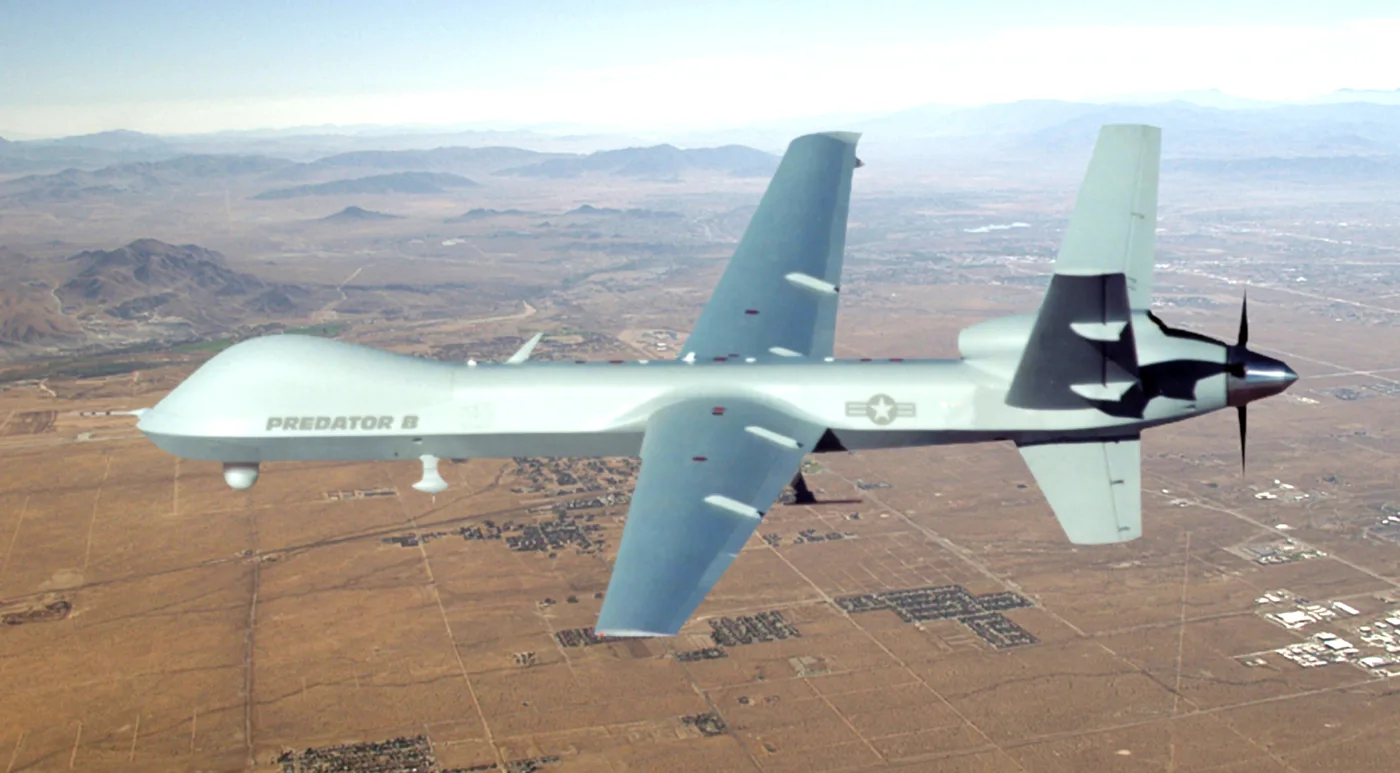
A headline saying 'drones have been deployed' leaves the most useful question unanswered: deployed to do what? The Commons Library's August 2025 briefing describes uncrewed systems operating across land, sea and air, with roles including reconnaissance, logistical supply and one-way attack. Those activities are connected by the use of uncrewed equipment, but they are not interchangeable capabilities.
This guide provides a way to read those distinctions. It does not rank particular weapons or offer operating instructions. Its central recommendation is to identify the environment, role and level of evidence before comparing one report with another. A story about a reconnaissance aircraft and a story about a maritime system may both use the word 'drone' while describing very different things.
Intelligence, surveillance and reconnaissance are often abbreviated to ISR. NATO's Intelligence, Surveillance and Reconnaissance Force describes a mission involving processing, exploiting and disseminating ISR information, and identifies the remotely piloted RQ-4D Phoenix among its equipment. This illustrates why the information produced by a system can be central to its value, rather than an ability to carry out an attack.
For readers, useful questions include what the source says the aircraft observed, who assessed that information and whether a reported conclusion is independently supported. An image is evidence of what it actually shows, not automatic proof of every claim attached to it. A report about a surveillance deployment also should not be turned into a claim of a strike unless separate evidence supports that event.
The Commons Library includes one-way attack systems and loitering munitions in its discussion of drone capabilities. By contrast, the Ministry of Defence's September 2025 OCTOPUS announcement concerned an interceptor intended for air defence. These examples show why the word 'drone' alone tells a reader little about whether a system is intended to gather information, attack or help defend against an aerial threat.
Our reading advice is to avoid using a delivery count for one role as a substitute for another. A statement that a country received a quantity of uncrewed systems is not enough to infer its stock of interceptors. Similarly, an announcement of interceptor development does not establish how much reconnaissance equipment is available. The category breakdown needs to come from the source.
FPV stands for first-person view. The June 2025 UK announcement used the term when discussing some of the drones supplied to Ukraine. It also described other categories, including interceptors. When FPV appears in coverage, readers should still look for the system's intended role instead of assuming the acronym supplies a complete description.
A useful editorial habit is to keep separate the name of a platform, the way it is controlled and the mission attributed to it. If an article provides only one of those, the missing details should remain missing. This prevents a familiar label from becoming an excuse to assume capabilities, range, performance or a particular manufacturer that the reporting has not identified.
The Commons briefing explicitly includes maritime drones and logistical supply among its examples. That wider scope matters when a source discusses 'uncrewed systems' collectively. A total covering several environments or missions is not equivalent to a total of aircraft, and readers should not silently narrow the meaning just because the accompanying photograph shows something flying.
When a package has a broad label, ask for the source's definition. Does the total describe individual vehicles, complete systems or a mixture? Does the release name the categories or leave them unspecified? These are questions to put to the evidence, not claims that any particular package has been counted incorrectly. Where the definition is absent, a careful article should explain the limitation.
DWN analysis: possession, readiness and results are separate questions. A delivery statement may establish that equipment reached a recipient. It does not, by itself, answer every question about availability for use, the support behind it or its performance. Reporting should be precise about the milestone actually evidenced rather than stretching one number across all three concepts.
For the same reason, comparisons should use matching units and periods. An annual delivery total should not be compared directly with a monthly production ambition as if both described stock available today. A cumulative number also cannot reveal the current usable inventory without further information. These limits apply regardless of which government or manufacturer issued the figures.
A practical way to read the next story
Start by writing a one-sentence description using only details that are explicit: who is reporting, what kind of system is involved, what role is claimed and what happened on which date. Then identify the stage: proposal, contract, test, delivery or reported use. If the report does not answer one of those questions, preserve the uncertainty instead of filling the gap.
Finally, ask what the evidence can reasonably support. A ministry release supports attribution to that ministry; a test report can support conclusions within its stated conditions; a delivery record concerns the equipment and period it covers. This approach lets readers recognise a significant development while keeping its limits visible. It is also the standard we aim to apply across Drone Warfare News.
DWN interpretation is identified in the text. This is not original field reporting or independent technical validation. Historical background retains its original dates; a later expansion date does not turn an old announcement into new news.
From disrupted oil routes to damaged refineries: how conflicts reach the petrol pump, why diesel is under pressure, and what drones can—and cannot—explain.
Published 23 September 2026Source date: 23 September 2026